


What you need to know...
Know your main macro groups
The three main macro groups are carbohydrate, protein and fat. Typically we add a subgroup of 'fruits and veggies' to carbohydrate as they are high in beneficial phytonutrients and fiber. Learn more here.
Understand macro serving sizes
Use the 'plate' method
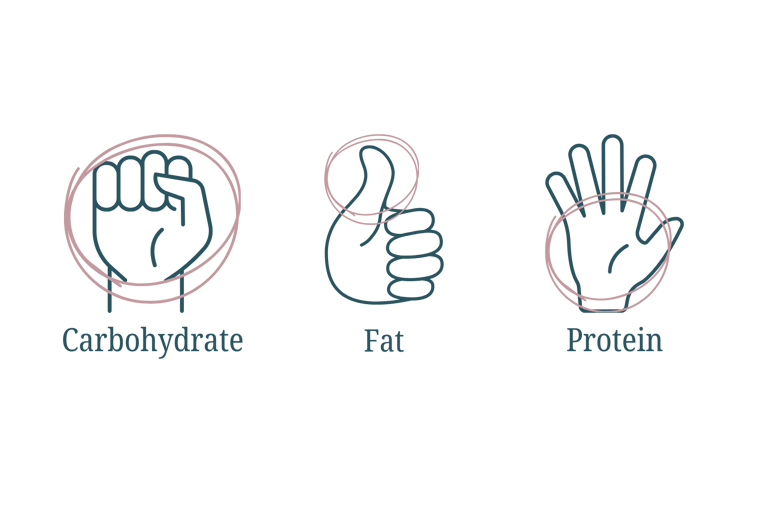
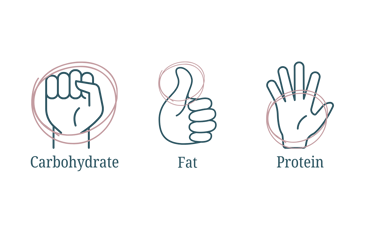
One serving of any macronutrient is roughly 100 calories. This is important to be able to calculate how much you are consuming at a meal. The easiest way to guesstimate a macro serving is using the 'hand' measure method. Below shows you a 100 calorie measure for each macro.
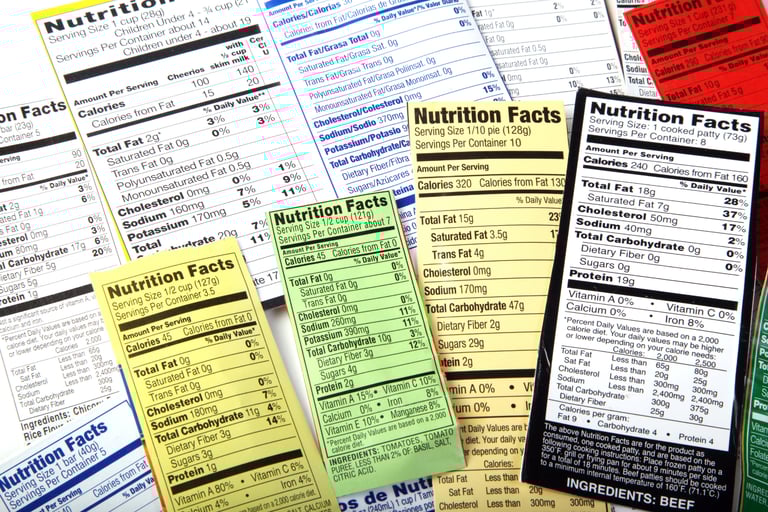
Utilize a foods nutrition label to calculate the total calories and breakdown of where those calories come from. 100 calories of carbohydrate and protein = 25 grams, while 100 calories of fat = 11 grams.
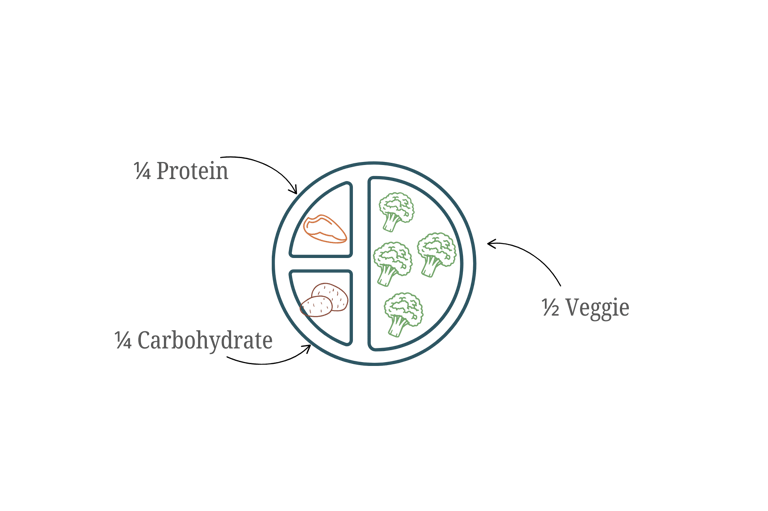
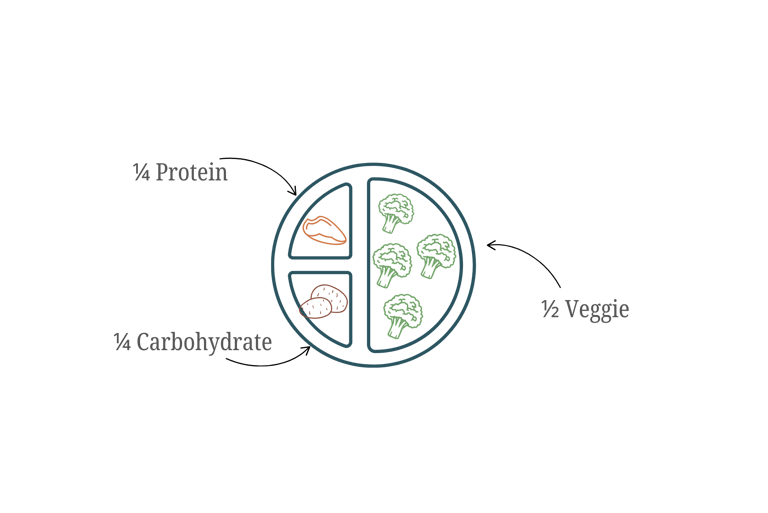
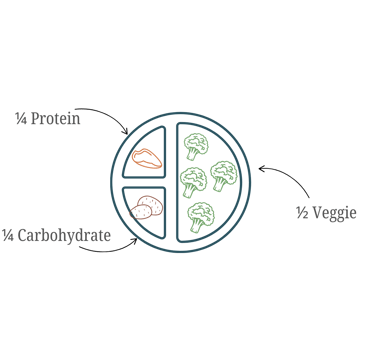
This is a guide to accomplish macro-balanced eating by looking at your plate and breaking it into three sections as outlined below.
Read nutrition labels
Read the full article
Often our diets are misbalanced when it comes to when and what we consume. Understanding the basics of how to build a macro balanced meal is important to helping your body regulate its hunger cues.
By having balanced hunger cues, we can begin to help curb cravings (especially of sugar) and in turn eat less without feeling ravenous. By learning how to balance our meals, we can set ourselves up for success in whatever our nutrition goals as well as quickly craft delicious, balanced meal preps.
What are macronutrients and why do I care?
Macronutrients are your body's fuel. Proteins are essential for muscle repair and growth, carbohydrates provide energy, and healthy fats support cell function and hormone production. The key is balance; each macronutrient is vital, but the proportions will vary based on your individual dietary needs.
A good rule of thumb is to aim for a 40% carbs, 30% protein and 30% fats ratio in your diet. An easy way to think of this 'balanced' split is by aiming to have equal(ish) amounts of all macros at every meal. If you want to take a deep dive into all things macronutrients, read this article.


Tools to build macro balanced meals
Getting started with macro balanced meals can feel overwhelming. Here are a few straightforward tools you can use to better understand and build balanced meals.
For most people, a goal calorie range for a meal should be between 400-600 calories, with equal portions of your macros being represented in the percentages outlined (carbs = 40%, protein = 30%, fat = 30%).
Use these tools to get an overall idea of what the macro breakdown of your meals are as well as see how to optimize by adding in additional servings of any macros that may be missing from your meal.
1. Nutrition labels
These are located on the back of any packaged food. You can get a good idea of what the macronutrient breakdown of a food is by analyzing the gram amounts listed by each macro. 100 calories of a carbohydrate or protein is 25 g, while 100 calories of a fat is 11 g.
2. Hand measures
Using your hand you can make a quick educated guess on what 100 calories of the different macronutrients looks like.
For carbohydrates, 100 calories is roughly the size of a 'fist'; for fats, 100 calories is roughly the size of a 'thumb'; and for proteins, 100 calories is roughly the size of a 'palm'.
3. The 'plate' method
Another simple yet effective way to macro balance any meal is by organizing your meal in the 'plate' method. This method incorporates all macronutrients by having 1/4 of your plate be a protein, 1/4 of your plate be a high fiber carbohydrate (>3g fiber per serving) and 1/2 of your plate be a vegetable.
You might be asking, where's the fat? Well the concept of this idea is that fat is used in the preparation of the components of your meal (you usually use olive oil or butter to sauté your proteins and veggies). So your serving of fat would be included in the preparation process of your dish.
Simple macro balanced meal examples
Here are a few simple yet delicious meal ideas:
1. Blueberry peanut butter oatmeal
Simple and straightforward. Get your carbohydrate from the oatmeal, protein from milk, fat from peanut butter and fruit/fiber from blueberries. Not only does it check all the boxes, but it helps you start your day off on the right foot.
2. Southwest chicken wrap
A quick option for lunch or dinner, packed with fiber from all the veggies as well as a high fiber tortilla (carbohydrate), chicken (protein) and dressing or guacamole for your fat to build out a macro-balanced meal in less than 10 minutes.
3. Chocolate peanut butter and banana smoothie
Smoothies can also be a quick and balanced meal option in a pinch. This recipe has all the macros you need to meet your needs as a meal or snack.
These meals not only satisfy hunger but also ensure you're getting a solid balance of nutrients. Feel free to mix and match according to your personal taste and dietary restrictions!
Building macro balanced meal preps
1. Plan ahead: To make healthy eating easier, try meal prepping. Have your proteins cooked and veggies chopped ahead of time to throw together meals quickly.
2. Get creative: Don’t be afraid to experiment with different foods. There are countless sources of proteins, carbs, and fats; variety is key to a well-balanced diet.
3. If at first you don't succeed, try again: Everyone’s nutritional needs are unique. Sometimes unforeseen obstacles may make it harder to meet your meal prep goals attainable. Don't give up, just adjust and adapt.

